
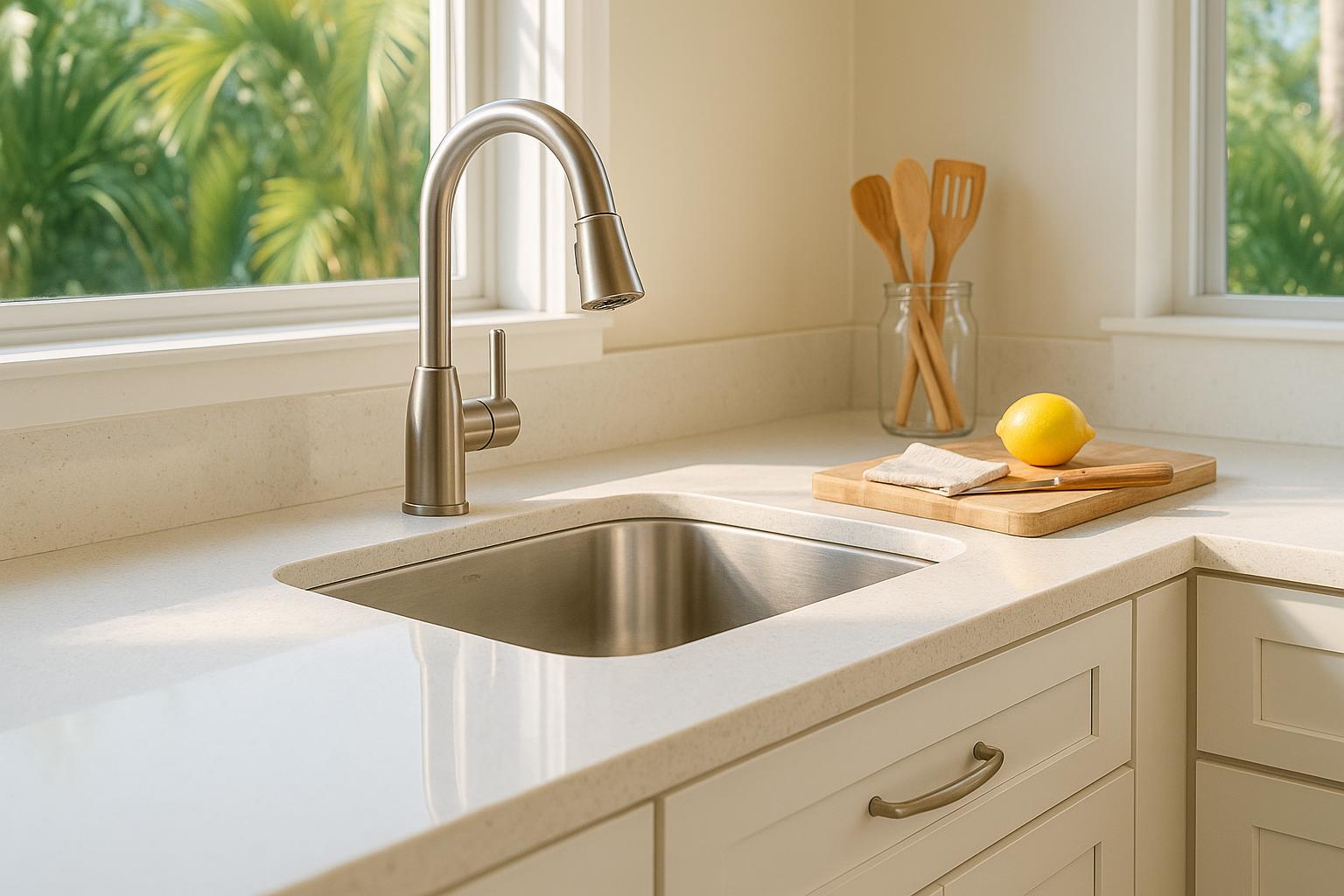
Your Climate Should Drive Your Material Choices
Remodeling a kitchen or bathroom in Lighthouse Point isn't quite the same as remodeling one in Denver or Chicago. Our subtropical climate — the humidity, the heat, the salt air that drifts inland from the coast — puts unique demands on every surface in your home. The countertop that performs beautifully in a dry mountain town might warp, stain, or deteriorate within a few years here.
Yet many homeowners pick materials based on what looks good in a magazine without thinking about how those materials will hold up in South Florida. That's how you end up with a gorgeous remodel that starts showing wear far too soon.
This guide breaks down the most common material decisions for kitchen and bathroom remodels and explains what actually works in our coastal environment — so your investment looks just as good five years from now.
Countertops: Beauty That Can Handle the Humidity
Countertops are usually the centerpiece of a kitchen or bathroom remodel, and the options can feel overwhelming. Here's how the most popular choices stack up in a Lighthouse Point home:
- Quartz: Engineered quartz is one of the best all-around performers for South Florida. It's non-porous, which means humidity and moisture won't seep in and cause staining or bacterial growth. It resists heat, scratches, and doesn't require sealing. For kitchens and bathrooms alike, quartz is a reliable choice.
- Granite: Natural granite is beautiful and durable, but it is porous. In our humid climate, that means you'll need to reseal it regularly — typically once a year — to prevent moisture absorption and staining. If you're willing to keep up with maintenance, granite works well.
- Marble: Marble is stunning but high-maintenance anywhere, and even more so near the coast. It's porous, soft, and prone to etching from acidic substances. If you love the look, consider using it in a low-traffic bathroom vanity rather than a busy kitchen.
- Butcher block: Wood countertops can struggle in high-humidity environments. Warping, swelling, and mold growth are real risks. If you want the warmth of wood, consider using it for a small island section rather than full kitchen countertops.
Cabinetry: What Holds Up and What Doesn't
Cabinets take a beating in South Florida homes. Bathroom cabinets deal with steam and moisture daily, and even kitchen cabinets face higher ambient humidity than homes in drier climates. Here's what to consider:
- Solid hardwood with a quality finish: Maple, cherry, and oak cabinets can perform well as long as they're properly sealed and finished. The finish is actually more important than the wood species — a high-quality lacquer or conversion varnish creates a moisture barrier that protects the wood underneath.
- Plywood construction over particleboard: This matters more here than almost anywhere else. Particleboard and MDF absorb moisture and swell, especially in bathrooms. Always ask your remodeler what the cabinet boxes are made of, not just the doors. Plywood-box cabinets cost a bit more but last significantly longer in our climate.
- Thermofoil: These vinyl-wrapped cabinet doors can peel and delaminate in high heat and humidity. We generally steer Lighthouse Point homeowners away from thermofoil, especially for kitchens near exterior walls or bathrooms without strong ventilation.
A Quick Note on Soft-Close Hardware
Humidity can cause wood to expand slightly, which affects how doors and drawers close. Soft-close hinges and drawer slides aren't just a luxury — they help compensate for minor seasonal swelling and keep your cabinets functioning smoothly year-round.
Flooring: Picking a Surface That Won't Buckle
Flooring failures are one of the most common remodeling regrets in South Florida, and almost always it comes down to choosing the wrong material for the environment.
- Porcelain and ceramic tile: These remain the gold standard for kitchens and bathrooms in our area. They're waterproof, durable, and available in styles that mimic wood, stone, and concrete. Large-format porcelain tiles are especially popular right now and give rooms a clean, modern look.
- Luxury vinyl plank (LVP): A strong alternative if you want the look of hardwood without the risk. Quality LVP is waterproof, comfortable underfoot, and handles humidity without warping. Just make sure you choose a product rated for the temperature swings that can happen in rooms with lots of sun exposure.
- Hardwood: Traditional hardwood flooring is risky in South Florida bathrooms and can be problematic even in kitchens. Moisture causes expansion, cupping, and buckling. If you're set on real wood, engineered hardwood is a better bet — its layered construction resists humidity-related movement better than solid planks.
- Natural stone: Travertine and slate are popular in Pompano Beach and Lighthouse Point homes, and they perform well as long as they're properly sealed. Budget for annual resealing to keep them looking their best.
Paint and Wall Finishes: Don't Overlook the Details
In a humid environment, the paint you choose matters more than you might think. For kitchens and bathrooms, always use a paint with built-in mildew resistance — most premium brands offer formulations specifically designed for high-moisture rooms. A satin or semi-gloss finish is easier to clean and resists moisture better than flat or matte finishes.
If you're considering wallpaper or accent walls, look for vinyl-coated options that can handle humidity without peeling. Traditional paper-backed wallpaper can bubble and separate from walls in our climate, especially in bathrooms.
Fixtures and Hardware: The Salt Air Factor
Homeowners in Lighthouse Point and the surrounding coastal communities in Deerfield Beach and Fort Lauderdale need to think about salt air corrosion — even if you're a few miles from the beach. Over time, salt air can pit and corrode certain metal finishes.
- Best bets: Stainless steel, brushed nickel, and solid brass fixtures resist corrosion well. Chrome can work but may show pitting over time in homes closer to the water.
- Avoid: Iron-based hardware or fixtures with thin plating. Cheap imported fixtures often use base metals that corrode quickly in a coastal environment.
Spending a little more on quality fixtures upfront saves you from replacing tarnished, pitted hardware in just a few years.
Ventilation: The Material Choice Nobody Thinks About
No matter how well you choose your surfaces, poor ventilation will shorten the life of every material in your bathroom or kitchen. A properly sized exhaust fan in every bathroom is non-negotiable in South Florida. For kitchens, a vented range hood that actually exhausts to the outside — not a recirculating model — makes a real difference in controlling moisture and protecting your cabinets and finishes.
When we plan remodels for homeowners in Lighthouse Point and the surrounding area, ventilation is one of the first things we evaluate. It's not glamorous, but it protects everything else you're investing in.
Make Choices That Last
A remodel is a significant investment, and the materials you choose determine whether that investment pays off for decades or starts disappointing you in a couple of years. In South Florida, the right material choices aren't always the same ones trending on social media — they're the ones that account for our unique climate.
At Basement Finish Pros, we help homeowners across Lighthouse Point, Boca Raton, Coral Springs, and the surrounding communities make smart material selections that balance style, durability, and budget. If you're planning a kitchen or bathroom remodel and want guidance on what will actually work in your home, reach out to our team for a consultation.